Align before your organisation spends
With message hierarchy agreed, design and implementation follow one narrative instead of polishing random pages while the offer stays fuzzy.






.png)
Works with any serious stack



Fewer competing calls to action, a clearer sequence for proof and risk, and journeys written for real browsing behaviour. Priorities are written down so development is not left guessing what “important” means.
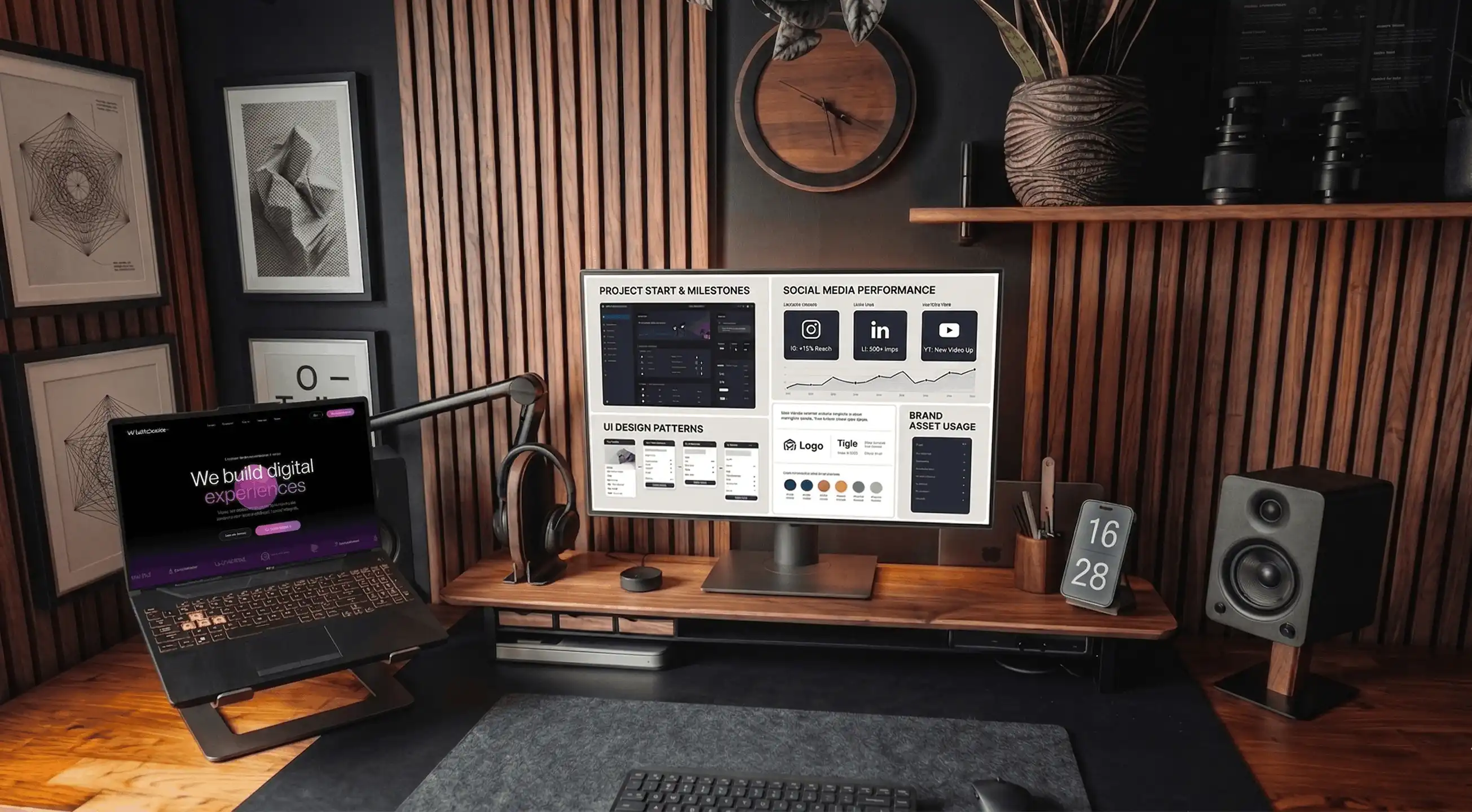
With message hierarchy agreed, design and implementation follow one narrative instead of polishing random pages while the offer stays fuzzy.
Critical paths, where proof sits, and how mobile behaves are mapped so UX changes structure, not just surface polish.
SEO, paid media, and content partners can share intent and guardrails instead of pulling in opposite directions.
“Good strategy reads quietly on paper and shows up clearly in the UI: fewer competing CTAs, honest ordering of price and risk, mobile patterns that match real browsing.”
When the nav feels crowded but the proposition still feels soft, we reset who the site is for, what they should do next, and what proof earns the click so brand and UX inherit a brief that holds through build.
We work next to teams shipping real sites and stores, not slide-only exercises. Below is how we plug in when the roadmap involves Shopify, Framer, WordPress, or custom front ends.
We document who the site serves, what your organisation offers, and promises your organisation intentionally avoids so messaging, UX, and campaigns stay coherent.
Every template gets a job: what someone should understand, believe, or do next. That brief follows the work into design and development so scope ties to outcomes.
We chart critical paths, where trust needs to appear, and where mobile quietly loses revenue, then prioritise fixes so teams are not decorating around structural gaps.
We pair constraints such as who edits content, how complex the catalogue is, and which integrations matter with Shopify, Framer, WordPress, or headless options so technology matches how your team really ships.
We split what ships now from what waits, state assumptions that could hurt launch, and keep measurement lightweight enough that someone will review it.
Who the site serves, what your organisation promises, how that promise is proven, and what deserves to ship first on the site. Deliverables include message hierarchy, page intents, an ordered backlog, and a simple view of what to measure.
Tactics are the tasks. Strategy chooses emphasis: what earns the homepage, what can wait, and how UX should support revenue. Without that alignment, campaigns and redesigns work against each other.
We do not run media retainers. Instead we document requirements so whoever owns ads or SEO can work from the same brief.
Focused clarity sprints typically run two to three weeks. Larger workshops and roadmaps take longer. Scope is agreed after one intake conversation.
Tell us where revenue or conversion stalls. We return a lean plan before visual design kicks off.

WordPress to Framer migration with a rebrand-led design built for lead generation, booked calls, and portfolio credibility.
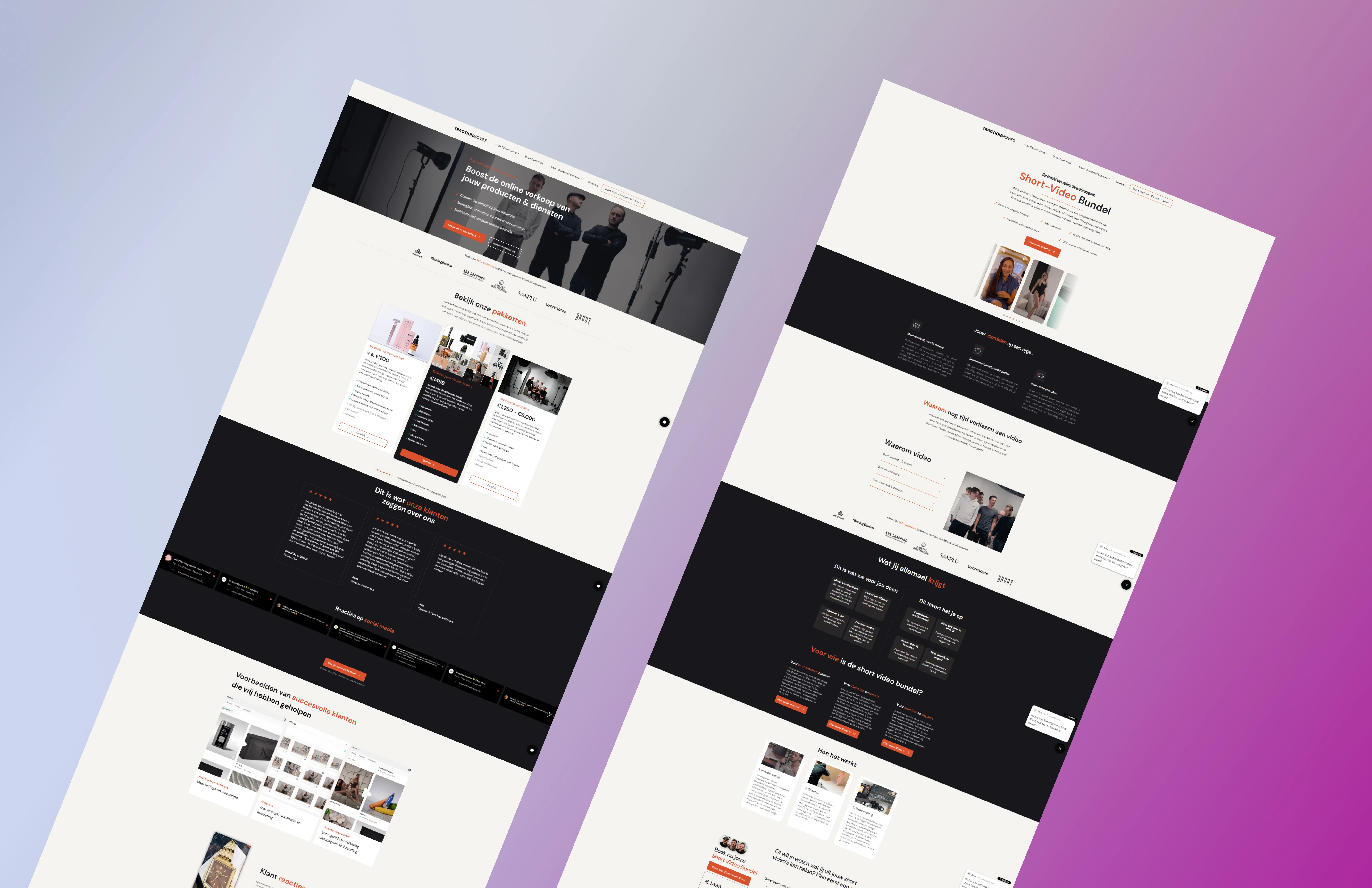
Framer portfolio for a branding studio: bold visuals, quick load times, and room for the team to grow the site.
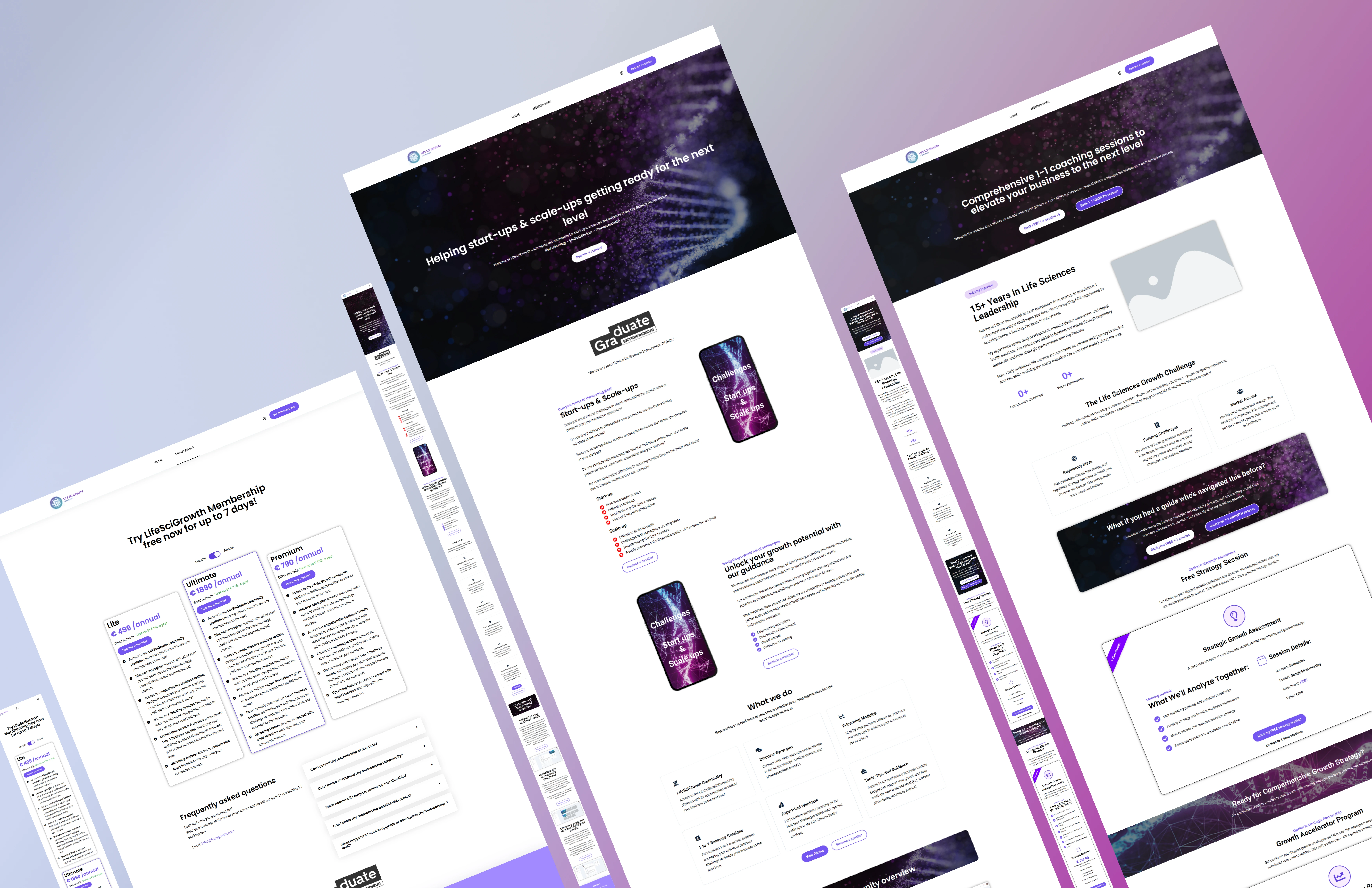
Rebrand with a new Shopify store for supplements: brand, UX, and performance in one release.